Branding
Political Campaign Branding in Kenya: A Guide for the 2027 Election
What every Kenyan campaign needs before launch: identity, posters, billboards, websites, social media, political ad rules and data protection. Non-partisan guide.
Kenya's next general election is scheduled for August 2027. For aspirants at every level, from MCA to governor, the months before nominations are when recognition is built. Voters will meet you on a poster, a WhatsApp forward, a billboard or a Facebook post long before they hear you speak, and they'll judge you in seconds.
This guide explains what campaign branding is, what every campaign needs before it launches, how to use digital channels well and the rules you need to respect along the way. It's non-partisan and applies whichever party or seat you're running for.
What campaign branding actually is
Campaign branding is the visual and verbal system that makes every piece of your campaign instantly recognisable as yours. It includes:
- A campaign mark or logo, usually built around your name.
- Colours that work with your party colours (if you have one) but are still distinct.
- Typography that is bold and easy to read from a distance.
- A slogan that sums up your promise in a few words.
- A photography style, starting with a strong, professional portrait.
- Templates for posters, banners, social posts, T-shirts and billboards.
When these are consistent, every poster, post and banner reinforces the last one. When they aren't, voters see a dozen different-looking campaigns and remember none of them.
Start earlier than you think
Recognition takes repetition. Aspirants who start building their identity and online presence early have more time to:
- Test which messages and photos resonate.
- Grow followers on the platforms their voters use.
- Prepare templates so materials can be produced quickly when the official campaign period begins.
- Avoid paying rush rates for printing and design in the final weeks.
A practical timeline: settle your identity, portrait and slogan first; then build your website and social pages; then prepare print and digital templates ahead of party nominations.
The campaign essentials checklist
Before you launch publicly, make sure you have:
- A campaign identity: logo, colours, fonts and slogan treatment.
- A professional portrait plus a library of photos with constituents.
- A one-page manifesto summary with three to five clear priorities.
- Poster and banner templates in standard print sizes.
- Social media templates for announcements, events, quotes and thank-you posts.
- A campaign website with your biography, priorities, track record, events and a volunteer sign-up.
- Official, verified social media pages in your name.
- A content calendar for the weeks leading to nominations and the election.
Our campaign branding service covers each of these.
Design tips for posters and billboards
Political posters compete with dozens of others on the same wall. The ones that work follow a few simple rules:
- One face, one name, one message. Crowded posters are ignored.
- Make your name the largest text after your face. Voters need to remember it on the ballot.
- Show the seat clearly: "MCA, [Ward]" or "MP, [Constituency]".
- Use high contrast so the poster reads from across the road.
- Keep the slogan short: three to six words.
- Design for the smallest size first. If it works as a WhatsApp image, it will work on a billboard.
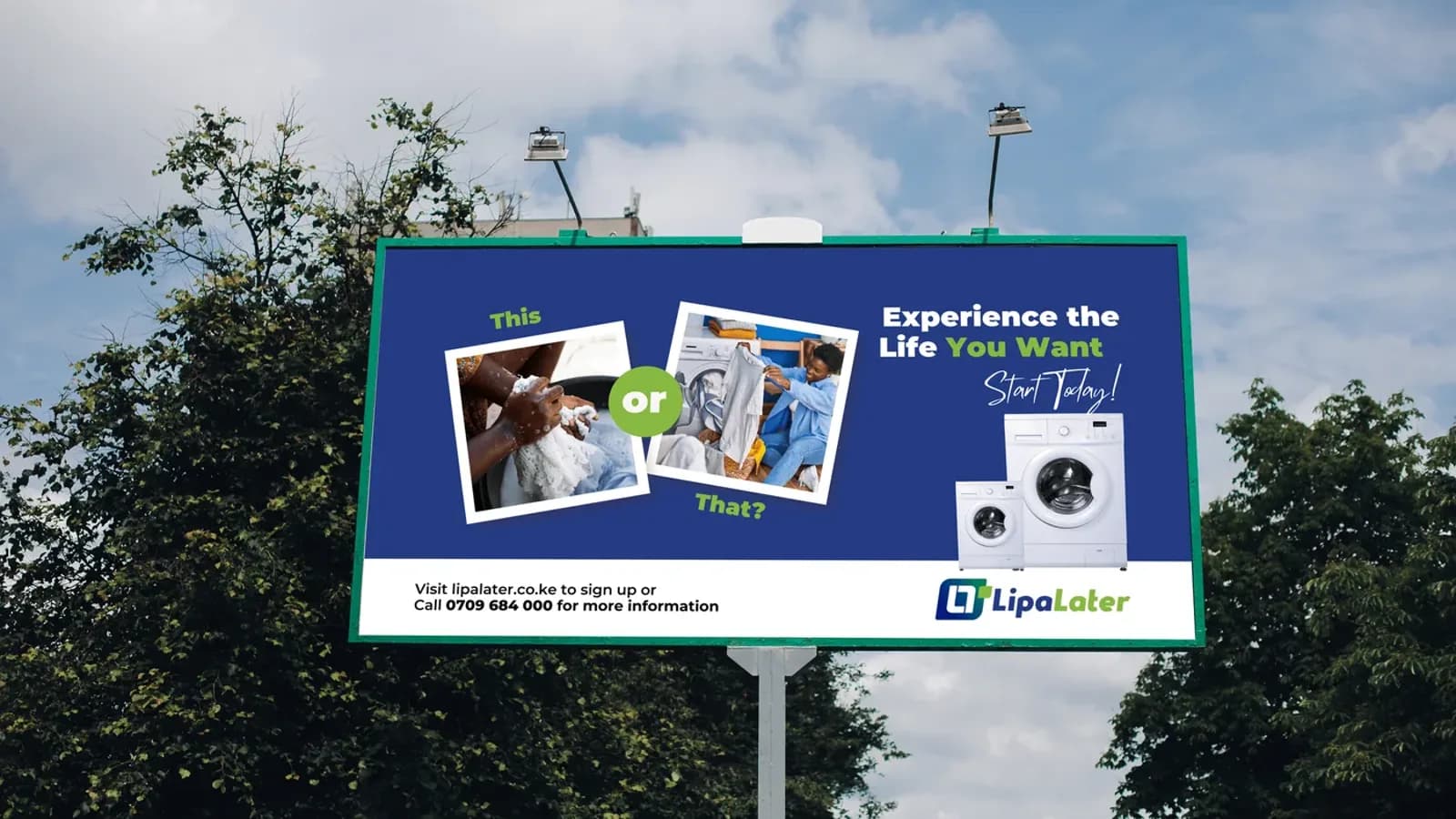
For billboards, assume people have about three seconds while driving past. Your face, your name and the seat are often all there is time for. See our billboard and outdoor work for examples of designing for distance.
Using digital channels well
Most Kenyan voters are on WhatsApp, Facebook and TikTok, and many will check your pages before deciding whether to take you seriously.
- WhatsApp: design square and vertical graphics that look good when forwarded. Keep text large and minimal.
- Facebook and Instagram: post consistently, not just during rallies. Behind-the-scenes, community work and short videos perform better than repeated posters.
- TikTok and short video: short, authentic clips with subtitles. Many people watch without sound.
- A campaign website: gives journalists, partners and undecided voters a credible place to learn about you, and a single link to share.
Our social media design and content creation teams produce campaign content in a consistent style.
Political advertising rules on Meta and Google
Paid political ads are tightly controlled by the platforms:
- Meta (Facebook and Instagram): ads about elections, politics or social issues require the advertiser to complete Meta's authorisation process and carry a "Paid for by" disclaimer. The ads are stored in Meta's public Ad Library.
- Google and YouTube: Google allows election ads only in some countries and requires election-ads verification where it does. Its rules have changed in recent years, so check the current policy for Kenya before planning a Google campaign.
Start verification early. It can take time, and unverified political ads are rejected. Our digital advertising team sets up accounts and campaigns within each platform's rules.
Respect data protection and the law
Campaigns handle a lot of personal data: volunteer lists, supporter phone numbers and event registrations. Kenya's Data Protection Act, 2019 applies to all of it, and the Office of the Data Protection Commissioner has published guidance on processing personal data for electoral purposes. In practice:
- Collect supporter data with clear consent and a privacy notice.
- Don't buy or use contact lists you have no lawful basis to use.
- Give people an easy way to opt out of messages.
- Store data securely and limit who can access it.
Content must also stay within the law. Kenya's National Cohesion and Integration Act prohibits hate speech, and misleading or defamatory claims about opponents carry legal risk. A clear, positive message is safer and usually more persuasive.
How much does campaign branding cost?
Costs depend on the seat, the number of materials and how much content you need each week. A ward-level campaign might need an identity, a portrait session and a set of templates. A county campaign may also need a website, regular video content, ads management and large-format print designs. We quote each campaign on its scope; send us your details for a clear, itemised quote.
Getting started
Write down three things: the seat you're running for, the three issues you most want to be known for, and the date you want to launch publicly. That's enough for a first conversation about your identity, materials and digital plan.
Frequently asked questions
When should a candidate start campaign branding?
As early as possible, ideally well before party nominations. Recognition takes repetition, and having your identity, portrait and templates ready means you can produce materials quickly when demand peaks.
What should a political campaign poster include?
A strong portrait, your name in large type, the seat you're running for and a short slogan. Keep it simple and high-contrast so it reads from a distance and as a WhatsApp image.
Can candidates run political ads on Facebook and Instagram in Kenya?
Yes, but the advertiser must complete Meta's authorisation for ads about elections or politics, and each ad must carry a 'Paid for by' disclaimer. Google allows election ads only in some countries, so check its current policy for Kenya.
Does the Data Protection Act apply to political campaigns?
Yes. Campaigns must collect and use supporters' personal data lawfully, with consent and a privacy notice. The Office of the Data Protection Commissioner has issued guidance on processing personal data for electoral purposes.