Websites
Hotel Website Design in Kenya: What Guests Need Before They Book
Hotel website design in Kenya for hotels, lodges and tour companies: must-have pages, direct booking options, photos, SEO, costs and how to prepare.
Guests decide where to stay by looking: at photos, room types, rates and how easy it is to book. Hotel website design in Kenya is about turning that first look into a direct enquiry or booking, whether you run a boutique hotel in Nairobi, a beach property in Diani, a safari lodge or a tour company. This guide covers what a hotel or tour website needs, how direct booking works, what it costs and how to plan the project so it launches on time.
Why does a hotel or tour company need its own website?
Because your own website is the one place where you control the photos, the story, the rates guidance and the booking path, without paying a commission on every direct enquiry. Booking platforms and social media are useful for discovery, but they present you next to competitors and on their terms.
A good hotel website does four jobs:
- Inspires: shows rooms, food, views and experiences in high-quality images.
- Informs: answers practical questions on room types, packages, amenities, location and policies.
- Reassures: links to genuine guest reviews and shows a real, reachable team.
- Converts: makes it easy to book, send an enquiry, call or message on WhatsApp.
Many guests find you on a booking platform or Instagram, then search your name on Google before booking. If your site is missing or outdated, you lose their confidence at the final step.
What should a hotel website include?
At minimum: a strong homepage, room or package pages, an experiences or amenities page, location details, policies, a gallery and a clear booking or enquiry route. The table below shows how this differs for common types of hospitality and travel businesses.
| Business type | Must-have pages | Main call to action |
|---|---|---|
| City or business hotel | Rooms, conference and events, dining, location | Book a room or request a conference quote |
| Beach resort or lodge | Rooms, packages, experiences, getting there | Check availability or send an enquiry |
| Tour or safari operator | Tours by destination, itineraries, prices "from", FAQs | Enquire about a tour or WhatsApp |
| Restaurant or caterer | Menu, reservations, events, location | Reserve a table or request a catering quote |
Room and package pages
Give each room type or package its own section or page, with several photos, bed configuration, capacity, key amenities and a "from" price or rates guidance where you can share it. Guests compare options quickly, so keep the layout consistent from one room to the next.
Experiences and amenities
Pools, spa treatments, game drives, conference halls and dining often tip the decision. Show them with real photography, not stock images.
Location and getting there
Include a map, directions from the nearest airport, airstrip or town, and transfer options. For lodges and camps, explain road conditions and travel times honestly.
Policies
Check-in and check-out times, children, cancellations, deposits and payment methods. Clear policies reduce back-and-forth emails and build trust.
Our checklist of pages every business website should have covers the general pages, such as About and Contact, in more detail.
How does direct booking work on a hotel website?
There are three common approaches: an enquiry or reservation request form, WhatsApp and click-to-call, or a full booking engine that shows live availability and takes payment. Which one fits depends on your size and how you manage rooms today.
- Booking enquiry form. The guest chooses dates, room type and number of guests, and the request reaches your team by email. You confirm availability and send payment details. This suits smaller properties and tour operators who tailor each booking.
- WhatsApp and phone. A WhatsApp button with a pre-filled message feels natural to many Kenyan travellers. It works best alongside a form, so international guests still have an option.
- Booking engine integration. If you already use a booking engine or channel manager, it can be connected to your website so guests see availability and book in real time. Full integrations are quoted based on the provider you use.
Whichever approach you choose, track it. Set up Google Analytics (GA4) events for form submissions, WhatsApp clicks and calls, so you can see how many enquiries the website produces. If your form collects names, phone numbers or passport details, explain how you use that information, in line with Kenya's Data Protection Act.
What makes a hotel website convert visitors into bookings?
Excellent photos, fast loading on phones, visible prices or rates guidance and a booking button that is always within reach. Most travellers browse on a phone, often on mobile data or patchy lodge Wi-Fi.
- Photography first. Dim or outdated photos undersell even the best rooms. Professional hospitality photography of rooms, food and spaces is worth planning before the website build. Our content creation and photography service covers this.
- Speed. Compress images, avoid heavy autoplay videos and test on a mid-range phone.
- Sticky booking button. Keep "Book now" or "Enquire" visible as people scroll.
- Rates guidance. Resident and non-resident rates, seasonal "from" prices or package prices help guests decide before they contact you.
- Genuine reviews. Link to your Google or booking platform reviews rather than copying unverifiable quotes.
How do guests find hotel websites on Google?
Through searches for your name, your location and the type of stay, such as "lodge in Naivasha" or "conference hotel in Westlands", plus your Google Business Profile on Maps. Your website and your profile work together.
Give every room, package and experience page a unique title and description, write naturally about your location, and keep your name, address and phone number consistent everywhere. A complete Google Business Profile helps you appear in map results. Our guide to local SEO and Google Business Profile in Nairobi walks through the steps. No one can guarantee a top position on Google, but a well-structured site gives you a fair chance.
How much does hotel website design cost in Kenya?
At Bravura, a Starter Website for up to 5 pages is KSh 26,000, a Business Website for up to 10 pages with a blog is KSh 45,000, and sites with booking engines, multiple languages or complex features are quoted on scope.
- Starter Website (KSh 26,000): suits a small guesthouse, restaurant or new tour operator. Includes mobile-responsive design, contact form and WhatsApp button, Google Maps and basic on-page SEO.
- Business Website (KSh 45,000): suits most hotels and established tour companies. Includes up to 10 pages, custom design aligned to your brand, a blog or news section, enquiry forms, Search Console and GA4 setup and content management training.
- Custom Website (quotation based): for booking engine integrations, multi-language sites and larger properties.
Booking functionality, extra pages, copywriting and maintenance are available as add-ons. Domain and hosting are quoted separately if you need them. Use the website cost estimator on our pricing page for an indicative total.
How long does it take, and how should you prepare?
A starter website typically takes two to three days once we have your content, and larger business websites usually take one to two weeks. The biggest factor is how quickly photos, text and feedback come through.
Before the project starts, gather:
- Your logo and brand colours
- High-quality photos of rooms, food, spaces and experiences
- Room types, packages and rates guidance
- Policies on check-in, children, cancellations and deposits
- Directions, transfer options and your map location
- The booking method you prefer: form, WhatsApp or an existing booking engine
What has Bravura built for travel and hospitality?
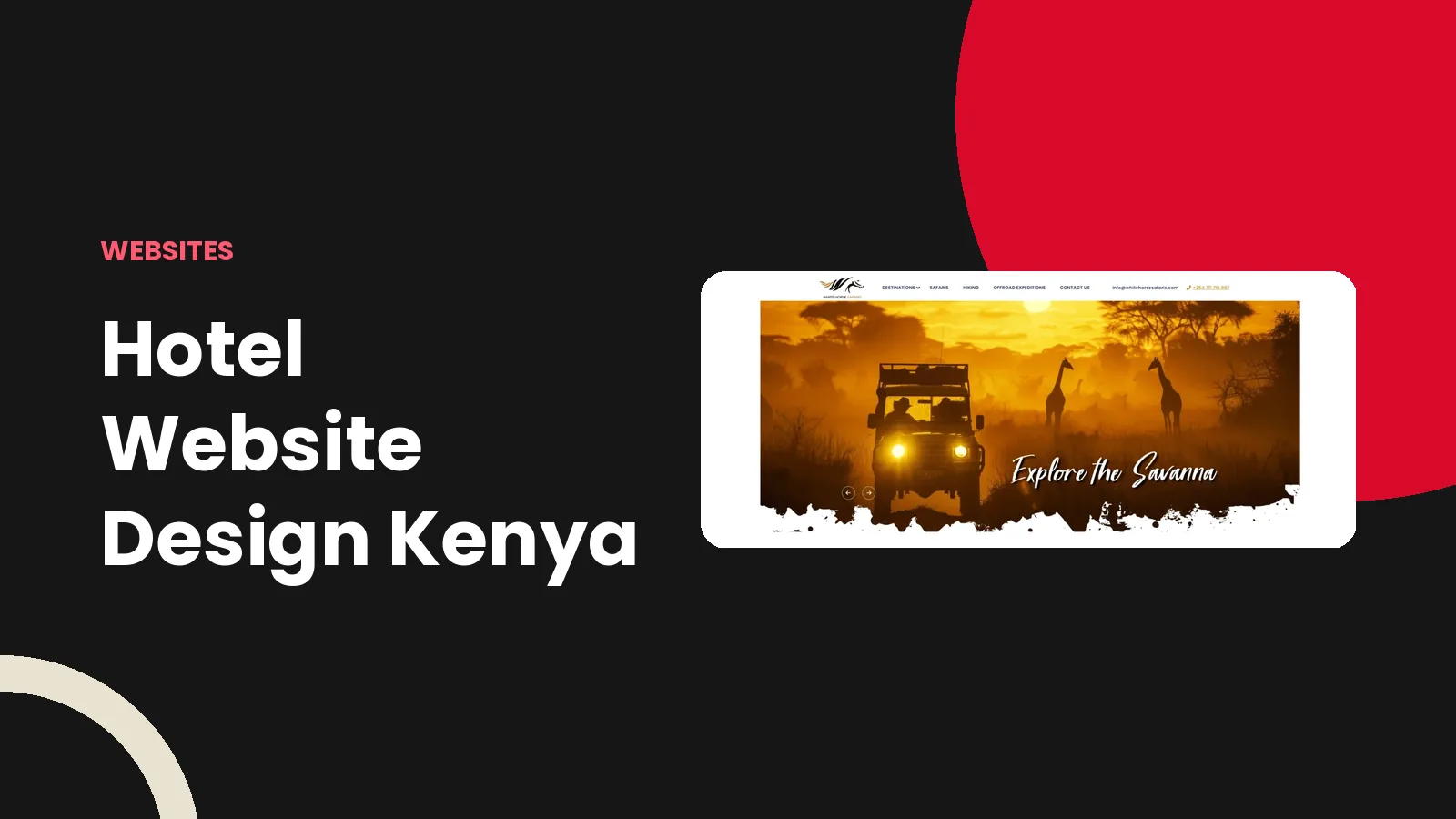
We have designed websites for travel and hospitality businesses, including an image-led site for White Horse Safaris that leads visitors from destinations to packages, a tours website with search and filters for Twende Tu Tsavo, and a travel booking site for FreeWorld Bookings. See more on our hotel and restaurant marketing page.
Getting started
Start with your photos and your booking method, because those two decisions shape the whole website. Then plan the pages guests need to decide, and make the booking button impossible to miss.
Bravura builds hotel, lodge, restaurant and tour websites through our website design and development service. Request a free quote with a link to your current site or social pages, and we'll recommend the right setup and a clear price before any work starts.
Frequently asked questions
What should a hotel website in Kenya include?
Room or package pages with photos and rates guidance, amenities and experiences, location and directions, policies, a gallery, links to genuine reviews and a clear booking or enquiry route.
Can guests book directly on our hotel website?
Yes. You can use a booking enquiry form, WhatsApp and click-to-call, or integrate a booking engine you already use. Booking engine integrations are quoted based on the provider.
How much does a hotel website cost at Bravura?
A Starter Website is KSh 26,000 for up to 5 pages and a Business Website is KSh 45,000 for up to 10 pages with a blog. Sites with booking engines or multiple languages are quoted on scope.
How long does it take to build a hotel website?
A starter website typically takes two to three days once content is ready. Larger business websites usually take one to two weeks, depending on how quickly photos, text and feedback come through.
Do you also photograph hotels and lodges?
Yes. We coordinate hospitality photography and video of rooms, food and spaces, quoted based on locations and shoot duration.