Digital Marketing
Motion Graphics in Kenya: Uses, Costs and How the Process Works
What motion graphics are, where Kenyan businesses use them, how the process works, what affects cost and how to brief a designer for social, ads and screens.
Motion graphics in Kenya have moved from a nice extra to a regular part of how brands advertise, from animated Instagram posts to sale offers looping on in-store screens. This guide explains what motion graphics are, where Kenyan businesses use them, how the process works, what affects the cost and how to brief a designer so you get something you can actually use.
What are motion graphics?
Motion graphics are animated designs: text, shapes, icons, logos, illustrations and data brought to life with movement, usually without filming anything. They sit between a static poster and a full video shoot.
Because everything is built from design elements, you do not need actors, locations or a camera crew. That makes motion graphics a practical way to add movement to your marketing when filming is too slow, too costly or simply not needed.
Motion graphics vs video vs static design
| Static design | Motion graphics | Live-action video | |
|---|---|---|---|
| What it is | A single image | Animated text, graphics and footage | Filmed people, places or products |
| Needs a shoot? | No | No (can include supplied footage) | Yes |
| Best for | Quick announcements, price posts | Offers, explainers, screens, ads | Testimonials, events, behind the scenes |
| Typical turnaround | Fastest | Moderate | Longest, depends on shoot days |
Where do Kenyan businesses use motion graphics?
The most common uses are social media posts and reels, short adverts, explainers, logo animations and content for digital screens in shops, offices and events. One animation can often be cut into several formats for different channels.
- Animated social media posts. Movement helps a post stand out in a busy feed, especially for launches, offers and countdowns. Our guide to social media content that gets noticed covers how motion fits into a wider content plan.
- Short video adverts. Short animated ads for Facebook, Instagram, TikTok and YouTube make the offer clear in the first few seconds. If you are planning paid campaigns, read our guide to Facebook and Instagram ads in Kenya.
- Explainer animations. Fintech, healthcare and service businesses use them to show how a product, app or process works in under a minute.
- Logo animations. A short animated logo for the start or end of videos, presentations and adverts.
- In-store and event screens. Supermarkets, malls, banks, clinics and exhibition stands increasingly run looping content on TVs and lightboxes.
- Presentations and reports. Animated charts and key figures make results easier to follow in pitches and AGMs.
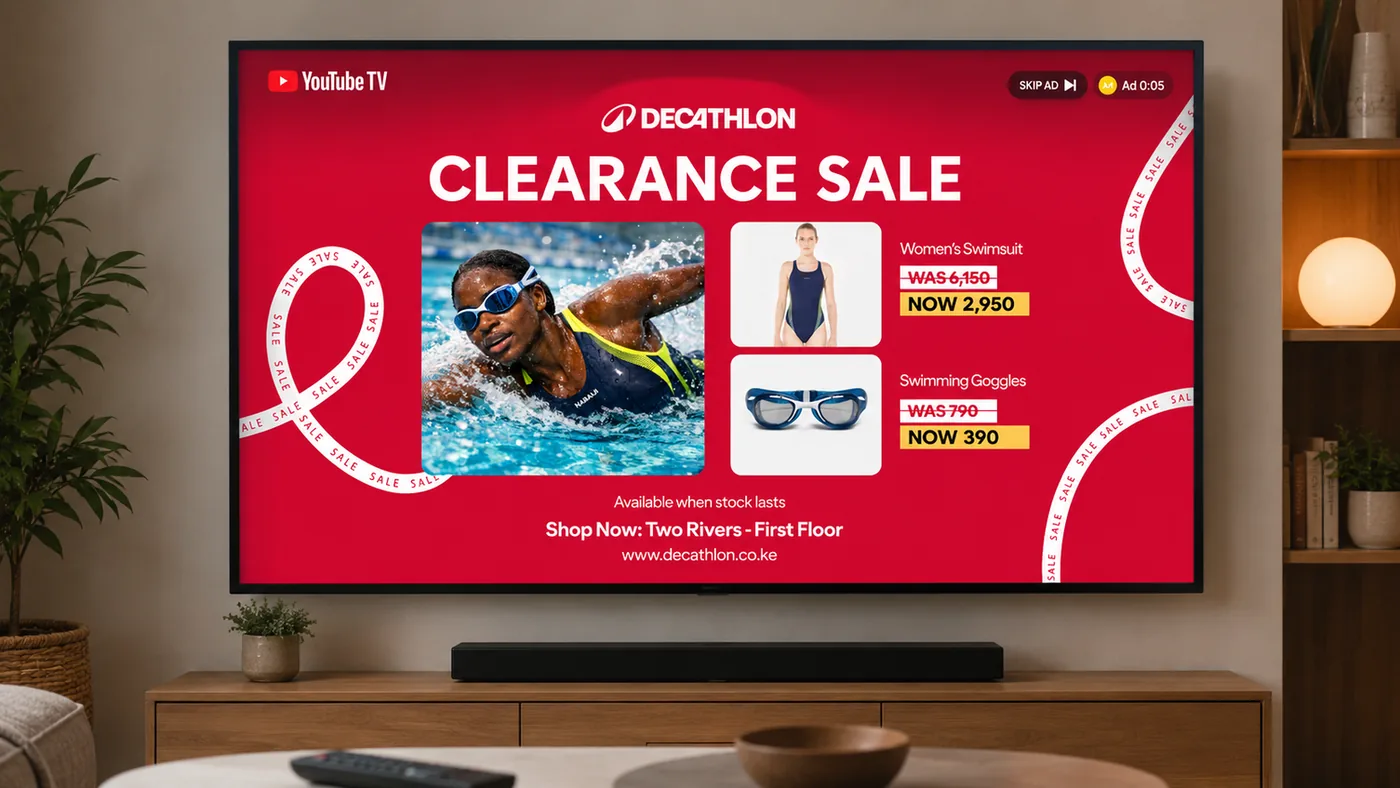
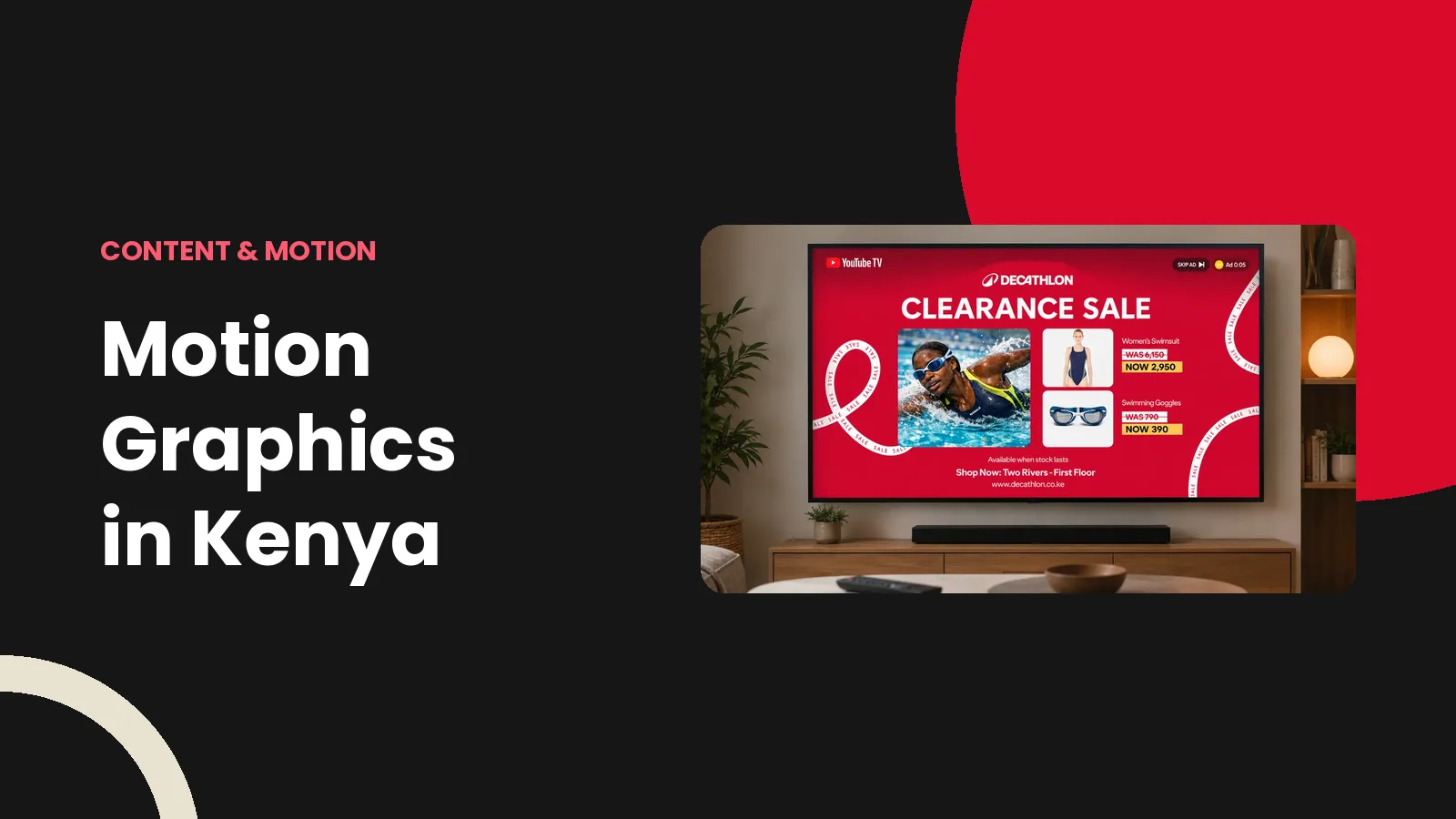
For example, we produced clearance sale motion graphics for in-store digital screens as part of the Decathlon store launch campaign, alongside mall branding, posters and gift card designs.
How does the motion graphics process work?
A good motion graphics project moves through five stages: brief, script, storyboard, animation and delivery. Agreeing each stage before moving on prevents costly changes late in the project.
- Brief. Agree the goal, audience, key message, call to action, where the animation will be shown and the deadline.
- Script or copy. Write the words that will appear on screen, plus voiceover lines if you are using one. Keep it short; most social animations carry one main idea.
- Storyboard or style frames. Sketch or design key frames so you can approve the look, layout and sequence before animation begins.
- Animation. The designer animates the approved frames, adds transitions, music or voiceover and sends a draft for review.
- Revisions and exports. Feedback is applied, then final files are exported in the sizes each platform needs.
At Bravura, motion graphics and animations are produced in-house by our design team. Our Motion and Animation package includes a script or storyboard, animation in your brand style, platform-specific exports and two rounds of revisions.
How much do motion graphics cost in Kenya?
Motion graphics are usually quoted per project, because length, complexity, voiceover, music and the number of versions all change the work involved. A 10-second animated offer post is a very different job from a two-minute explainer.
The main factors that affect price are:
- Length. Longer animations take more time to design and animate.
- Complexity. Animated text on a branded background is simpler than custom illustration or character animation.
- Voiceover and music. Professional voiceover and licensed music add cost and are best agreed upfront.
- Number of versions. Vertical, square and landscape versions, or several cut-downs for ad testing, each take extra time.
- Assets. Ready brand guidelines, logos, product photos and footage make production faster.
At Bravura, motion graphics are quoted on scope, and we explain any third-party licences, such as music or stock footage, in the quote. Note that our standard social media design packages cover static creatives; motion graphics and video are quoted separately.
What sizes and formats do you need?
Plan your formats before animation starts, because reframing a finished landscape video for vertical feeds is harder than designing for both from the beginning. The most common formats are:
| Format | Ratio | Where it is used |
|---|---|---|
| Vertical | 9:16 | Reels, TikTok, Stories, YouTube Shorts, WhatsApp Status |
| Portrait | 4:5 | Instagram and Facebook feeds |
| Square | 1:1 | Feeds and some ad placements |
| Landscape | 16:9 | YouTube, websites, presentations and most TV screens |
Final files are normally delivered as MP4. For in-store screens, confirm the screen's orientation and resolution with your venue or supplier before you brief the designer.
How do you brief a motion graphics designer?
Give the designer the goal, the message, the platforms and the deadline, plus every brand asset you have. A clear brief is the single biggest factor in getting a good result on time.
Include:
- What the animation should achieve, such as enquiries, app downloads, footfall or awareness.
- The one message people should remember, and the call to action.
- Where it will run and in which sizes.
- Approximate length, for example 6, 15 or 30 seconds.
- Your logo files, brand guidelines, fonts, product photos and any footage.
- Examples of animations you like, and what you like about them.
- Who approves the work, so feedback is consolidated.
Design for sound off as well as sound on. Many people scroll with their sound muted, so key words and the offer should be readable on screen, with captions on any voiceover.
Getting started
If your feed is mostly static posts, start small: one animated version of your best-performing offer, sized for Reels and your feed, then compare how it does. If you are launching a product or opening a store, plan the motion pieces alongside the rest of your campaign so everything looks consistent.
Our content creation and motion graphics service covers animated posts, promotional animations, explainers, reels and coordinated photo and video production, and works hand in hand with our social media design and digital advertising services. Request a quote for motion graphics and tell us what you want to show and where it will run.
Frequently asked questions
What are motion graphics?
Animated designs such as text, shapes, icons, logos and data, usually created without filming. They sit between a static poster and a full video shoot.
How much do motion graphics cost in Kenya?
It depends on length, complexity, voiceover, music and the number of versions. At Bravura, motion graphics are quoted per project after we understand the brief.
How long does a motion graphics project take?
It depends on length and complexity. Agreeing the script and storyboard early, and supplying brand assets upfront, keeps the project moving quickly.
What formats will I receive?
Usually MP4 files sized for each platform, such as 9:16 for Reels and TikTok, 4:5 or 1:1 for feeds, and 16:9 for YouTube, websites and screens.