Websites
How Much Does Website Design Cost in Kenya in 2026?
What affects website design prices in Kenya in 2026, what you should expect at each budget level, hidden costs to plan for, and how to compare quotes fairly.

Ask five web designers in Nairobi what a website costs and you could get five very different answers. One quotes KSh 15,000, another KSh 60,000, and an agency comes back with a proposal several times higher. It's confusing, and it makes it hard to know whether you're being overcharged or being offered something that will cause problems later.
This guide explains what actually drives website prices in Kenya in 2026, what you should expect at different budget levels, the costs people often forget, and how to compare quotes fairly. We'll use our own published prices as reference points, because we'd rather be transparent than vague.
The short answer
For a professionally designed website built by an agency, our own pricing looks like this:
- Landing page: from KSh 12,000. One focused page for a campaign, product or event.
- Starter website: KSh 26,000. Up to five pages for a small business that needs a credible online presence.
- Business website: KSh 45,000. Up to ten pages, a blog or news section, and stronger search and analytics setup.
- Custom and e-commerce websites: quotation based, because the scope varies so much.
Other designers will price differently. What matters is understanding what you are paying for, so you can compare like with like.
What actually affects the price of a website
1. Number of pages and how much content they hold
A five-page site (Home, About, Services, Gallery, Contact) is a very different job from a 25-page corporate site with individual service pages, team profiles, case studies and downloads. Each page needs layout decisions, content, images and testing on mobile.
2. Custom design versus a lightly adjusted template
Templates aren't bad: they can be a sensible starting point for small budgets. But a template with your logo dropped in rarely communicates what's specific about your business. Custom design takes longer because it starts from your customers, your brand and your content.
3. Who writes the content
This is the most underestimated part of any website project. Many sites are delayed for weeks because the business hasn't written its text. Professional copywriting costs extra, but it usually makes the biggest difference to whether visitors understand your offer and get in touch.
4. Functionality
Each feature adds design, development and testing time:
- Contact and quote forms
- WhatsApp chat buttons
- Booking or appointment requests
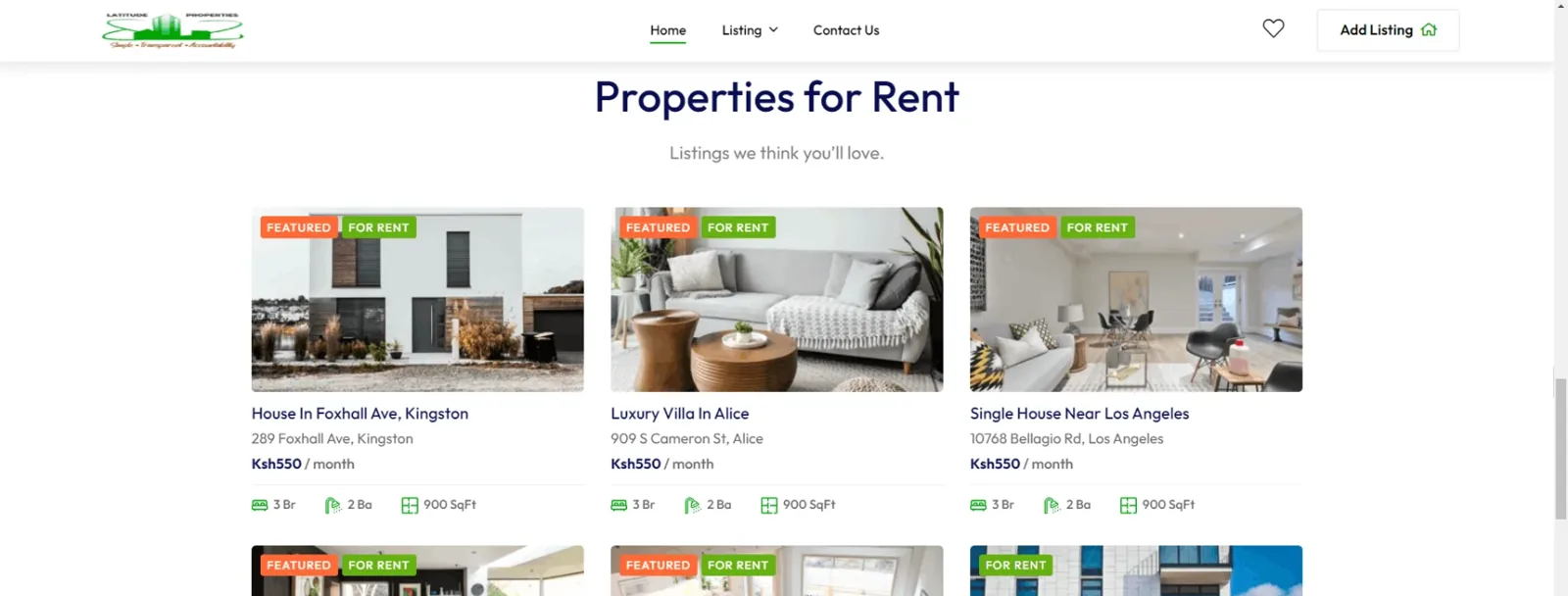
- Property or vehicle listings with filters
- Online shops with M-Pesa and card payments
- Member areas, portals or multilingual content
E-commerce is a big step up, because every product needs setting up and payments need careful integration and testing.
5. SEO and analytics setup
A website that loads fast, has clean page titles and descriptions, and is connected to Google Search Console and Google Analytics gives you a much better foundation than one that simply "looks nice". Some quotes include this; many don't.
6. Revisions, training and support
How many rounds of changes are included? Will someone show your team how to update the site? What happens if something breaks after launch? These details rarely appear in the headline price, but they matter a lot.
What to expect at different budget levels
Under KSh 20,000
At this level you're usually getting a template-based site with limited pages and limited customisation. That can be fine for a very new business testing an idea. Check carefully who owns the domain, whether the site is mobile-friendly, and whether you can update it yourself.
KSh 25,000 to KSh 50,000
This is where most small and medium Kenyan businesses land. You should expect a professional design that reflects your brand, a mobile-first build, contact forms and WhatsApp integration, basic on-page SEO and some training. Our Starter and Business websites sit in this range.
Above KSh 50,000
Larger budgets cover corporate sites with many pages, e-commerce stores, custom features, integrations with other systems, professional copywriting and photography, and more extensive strategy work. Prices vary because scope varies.
The costs people forget
When budgeting, make sure you've accounted for:
- Domain name: a yearly renewal for your .co.ke or .com address.
- Hosting: a monthly or yearly fee for the server that runs your website.
- Business email: if you want addresses like you@yourbusiness.co.ke.
- SSL certificate: often free with good hosting, but confirm it.
- Maintenance: updates, backups and security monitoring.
- Content: copywriting, photography or stock image licences.
- Payment gateway fees: for e-commerce, providers charge a fee per transaction.
A good designer will explain these upfront rather than surprising you after launch.
How to compare website quotes fairly
When you have two or three quotes, line them up against the same questions:
- How many pages are included, and which ones?
- Is the design custom or template-based?
- Who writes the content?
- Which features are included, and which cost extra?
- Is basic SEO and Google Analytics setup included?
- How many revision rounds are included?
- Will we receive training to update the site?
- Who owns the domain, hosting and website once it's paid for?
- What support is available after launch, and at what cost?
- Can we see live examples of similar websites you've built?
The cheapest quote often looks expensive once you add the missing pieces. The most expensive quote isn't automatically the best either. Look for clarity.
A quick example
Imagine a physiotherapy clinic in Westlands. It needs a homepage, an about page with practitioner profiles, a services page, an insurance partners page, an appointment request form and a contact page with a map. That's six pages plus a form, so it would likely start from our Business Website or a Starter Website with an extra page and booking functionality added. Our website cost estimator shows how that adds up.
The bottom line
A website is not just a design expense. It's often the first place customers decide whether to trust you. Budget for the parts that make it effective: clear content, a mobile-first build, basic SEO and a way for your team to keep it up to date. Then compare quotes on what they include, not just the number at the bottom.
If you'd like a clear, itemised quote for your own website, tell us what you need or try our estimator.
Frequently asked questions
What is a reasonable price for a small business website in Kenya?
It depends on pages, features and who writes the content. At Bravura, a professionally designed starter website of up to five pages begins at KSh 26,000, and a ten-page business website with a blog is KSh 45,000.
Are domain and hosting included in website prices?
Not always. Many designers quote them separately. Always ask whether the quote includes domain registration, hosting, SSL and email, and what the yearly renewal costs will be.
Why do website quotes vary so much?
Quotes reflect different scopes: number of pages, custom design versus templates, copywriting, e-commerce, integrations, SEO setup, training and support. Compare what is included, not only the headline price.
How much does an e-commerce website cost in Kenya?
E-commerce costs more because of product setup, payment integration such as M-Pesa, and testing. We quote e-commerce based on catalogue size and features; our estimator gives an indicative figure.